
Exosomes for Hair Loss: Breakthrough Science or PRP 2.0?
Do Exosomes Actually Regrow Hair?
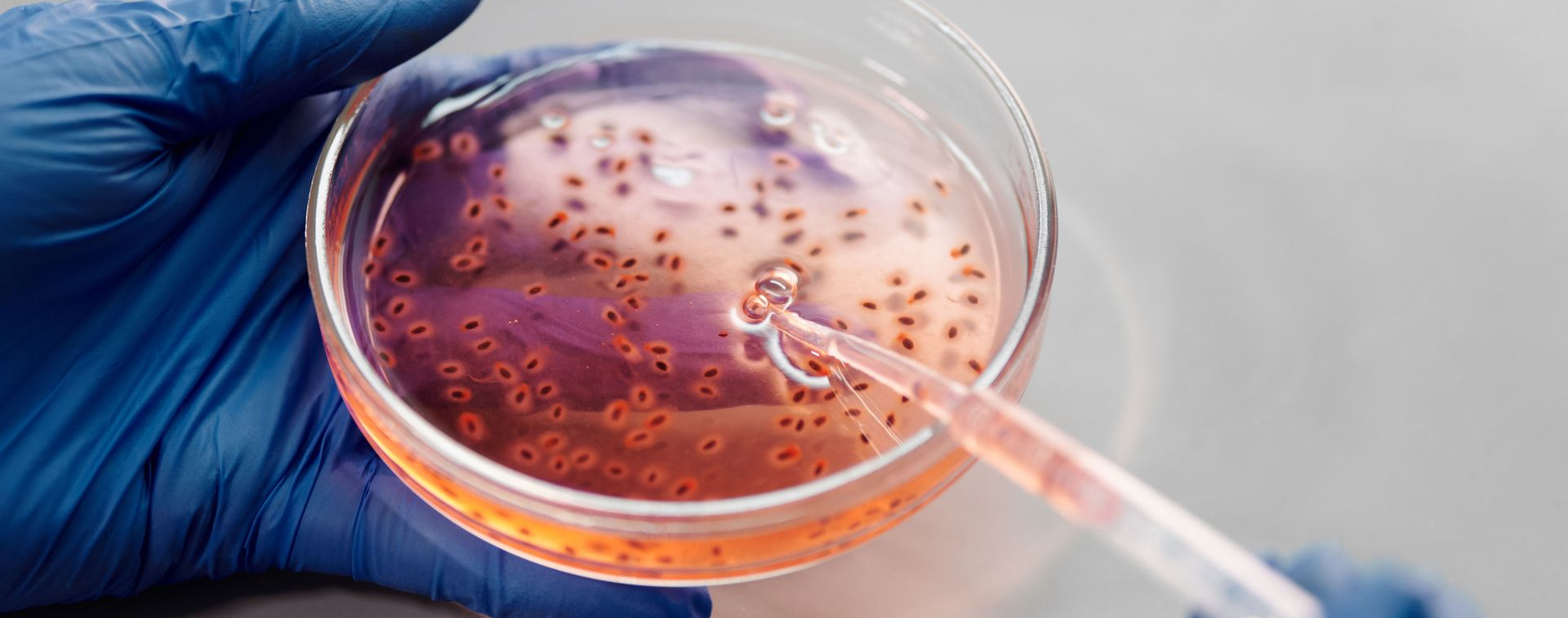
Exosomes are quickly becoming one of the hottest buzzwords in hair restoration.
Clinics are promoting exosome injections as a new form of regenerative therapy that may stimulate follicles, improve hair density and encourage new growth. The language sounds impressive: cellular communication, growth factors, stem-cell signaling and tissue regeneration.
But we have heard a very similar story before.
A few years ago, platelet-rich plasma — better known as PRP — was being promoted as the next breakthrough in hair restoration. PRP had a plausible biological mechanism and some encouraging studies. Yet results in real patients proved inconsistent, treatment protocols varied considerably, and many patients underwent repeated scalp injections without achieving the kind of visible hair restoration they expected.
So the obvious question is:
Are exosomes truly the next generation of hair-loss treatment — or are we watching PRP history repeat itself?
What Exactly Are Exosomes?
Exosomes are extremely small extracellular vesicles released by cells.
They are not stem cells, and they do not turn into new hair follicles.
Instead, they act more like microscopic biological messengers. They can carry proteins, lipids, growth-related molecules and genetic material such as RNA from one cell to another.
Researchers believe these messages may influence the behavior of nearby cells.
When it comes to hair follicles, laboratory research suggests certain exosomes may influence dermal papilla cells, follicular stem cells, blood-vessel formation and signaling pathways associated with the hair-growth cycle.
In very simple terms, an exosome may potentially deliver a message that says something like:
Grow. Repair. Reduce inflammation. Stay in the growth phase longer.
That sounds promising.
But there is an important difference between sending a growth signal and correcting the reason a follicle became unhealthy in the first place.
The Question Nobody Should Skip
Imagine a lawn whose roots are being damaged by disease.
You can pour expensive fertilizer onto that lawn every month. The fertilizer may stimulate some growth or make the surviving grass appear healthier temporarily.
But if you never treat what is damaging the roots, have you actually solved the problem?
That is one of the central questions surrounding exosome therapy for hair loss.
In androgenetic alopecia, for example, genetically susceptible hair follicles respond abnormally to androgen signaling, including dihydrotestosterone, or DHT. Over time, affected follicles progressively miniaturize.
Exosomes may potentially provide supportive or regenerative signals to those follicles.
But unless the damaging biological environment has also been addressed, it is reasonable to ask how durable that stimulation will be.
A growth signal is not the same thing as removing the damage signal.
Do Exosomes Actually Regrow Hair?
This is where the conversation becomes much more interesting.
There is legitimate early research suggesting that exosomes may have an effect on hair growth.
A 2025 systematic review identified 11 human studies of exosome-based treatments for hair loss. Those studies included only two randomized controlled trials, alongside retrospective studies, prospective studies, case reports and a case series.
All 11 studies reported some improvement in at least one measured hair parameter, with reported increases in hair density and thickness in some (not all) patients.
However, the researchers also highlighted major limitations:
- too small study populations;
- different sources of exosomes;
- different preparation methods;
- different treatment protocols;
- different outcome measurements;
- and varying lengths of follow-up.
The authors concluded that larger, standardized randomized controlled trials are still needed before any treatment protocols can be proven.
A separate clinical review identified nine relevant alopecia studies involving just 125 treated patients. Its authors similarly concluded that larger trials, longer follow-up, and stronger (read independent) regulatory oversight are needed to
More recent research continues to describe exosome therapy as promising while emphasizing that the clinical evidence remains limited by small sample sizes, inconsistent study designs and lack of standardized outcome measures.
So the scientifically responsible answer today is not: “Exosomes definitely work.”
Nor is it: “Exosomes definitely do nothing.”
It is instead: There may be some encouraging early signals, but we do not have enough standardized, independent, un-biased, evidence to know exactly how effective these treatments are, which preparations work best, who benefits most or how durable the results are.
Not All Exosomes Are the Same
This may be one of the biggest issues consumers need to understand.
The word exosome does not describe one standardized medication.
Clinical studies have investigated extracellular vesicles derived from a variety of sources, including:
- adipose-derived cells;
- bone marrow;
- placenta;
- umbilical cord tissue;
- hair-follicle cells;
- and other cellular sources.
Different source cells can produce vesicles containing very different biological cargo.
Results may also be affected by:
- how the source cells are cultured;
- how the exosomes are isolated;
- how they are purified;
- their concentration;
- storage conditions;
- preparation immediately before treatment;
- and how the product is delivered into the scalp.
Researchers repeatedly identify this lack of standardization as one of the barriers to translating exosome research into predictable clinical treatment.
That means simply saying: “We offer exosome therapy.” doesn't tell a patient nearly enough.
A better question would be: Which exosome product? From what cellular source? At what concentration? Manufactured how? Studied in whom? And with what long-term results?
Are Exosome Products FDA Approved?
Currently, no.
The U.S. Food and Drug Administration states that there are currently no FDA-approved exosome products.
The FDA explains that exosome products intended to treat disease or medical conditions generally require regulatory approval and has warned consumers about unapproved regenerative medicine products marketed as exosome treatments.
The FDA has also previously reported serious adverse events associated with unapproved products marketed as containing exosomes.
This distinction is important because terms such as: “FDA registered,” “produced in an FDA-registered facility,” or “laboratory tested” do not mean that the treatment itself has been FDA approved as safe and effective for hair loss.
People considering these therapies should understand exactly what product is being used and what regulatory status applies to it.
Why Exosomes Remind Us of PRP
The similarities are hard to ignore.
PRP treatment involves concentrating platelets from a patient's own blood and injecting them into the scalp. Because platelets release growth factors involved in healing and tissue repair, researchers theorized that those signals might also stimulate hair follicles.
And there is evidence that PRP can produce some small measurable improvements in some patients.
A 2024 systematic review of male androgenetic alopecia found that six of eight randomized trials reported some statistically significant temporary improvements in hair density compared with controls.
But the same review concluded that the quality of evidence remained limited by methodological differences, bias and substantial variation between treatment protocols.
So PRP was never necessarily biologically absurd.
The problem was that a plausible biological mechanism gradually became marketed as something much more definitive than the evidence justified.
That history should make patients cautious when the next regenerative treatment arrives with similar promises.
The Difference Between “Statistically Significant” and “I Got My Hair Back”
This is another distinction that often gets lost in hair-loss advertising.
A clinical study might report an increase in hair density of several hairs per square centimeter.
Scientifically, that may be meaningful.
Cosmetically, however, the patient may barely notice the difference.
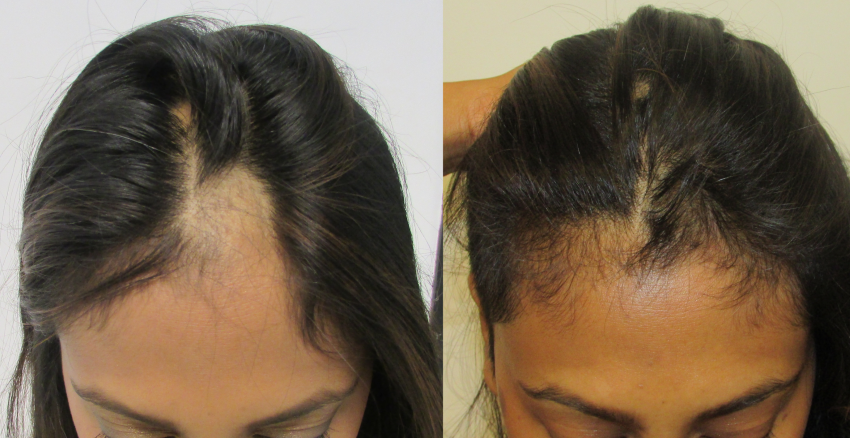
That is why before-and-after photographs, standardized imaging, long-term follow-up and patient-reported outcomes are all important.
Hair-loss patients generally are not paying thousands of dollars because they want a statistically detectable change under magnification.
They want to look in the mirror and see meaningful restoration.
Those are not always the same outcome.
Could Exosomes Eventually Become Useful?
Perhaps.
The science behind cellular signaling is real, and future exosome technology could become considerably more sophisticated.
Researchers are already studying how extracellular vesicles affect signaling pathways associated with follicular growth, inflammation, aging and dermal papilla function.
A future exosome therapy might eventually involve:
- a precisely defined cell source;
- standardized biological cargo;
- predictable potency;
- diagnosis-specific formulations;
- controlled dosing;
- validated delivery methods;
- and clinical trials demonstrating durable outcomes.
That would be a very different proposition from simply injecting an undefined regenerative product because exosomes are currently fashionable.
Questions to Ask Before Paying for Exosome Hair Therapy
Anyone considering exosome injections for hair loss should ask the provider:
- What exactly is the product being injected?
- Where are the exosomes derived from?
- Who manufactures the product?
- How are the exosomes characterized and measured?
- What concentration or dose am I receiving?
- Has this exact product been studied in humans with my type of hair loss?
- Are there randomized controlled trials?
- Have the results been reviewed and verified by an independent 3rd party?
- How long were patients followed?
- What percentage of patients experienced visible cosmetic improvement?
- How long did the improvement last?
- Will repeat treatments be required?
- Most importantly: what is causing my hair loss, and how does this treatment address that cause?
That final question may be the most important one.
Treat the Cause Before Chasing the Next Treatment
Hair loss is not one disease.
Genetics, hormonal signaling, immune activity, nutritional status, medications, stress, illness and other physiological factors can all influence hair growth.
A treatment that stimulates follicles may therefore be useful in one situation and largely irrelevant in another.
At Stop and Regrow, our approach begins with understanding the pattern and possible causes of hair loss rather than automatically reaching for whichever treatment happens to be receiving the most attention online.
That may involve reviewing:
- the patient's history;
- progression and pattern of hair loss;
- photographs over time;
- relevant laboratory results;
- previous treatments;
- and how the follicles respond during follow-up.
New technology should be welcomed when the evidence supports it.
But promising science should not be confused with proven medicine.
Exosomes may eventually become an important part of hair restoration.
Right now, they remain an emerging treatment whose biology is intriguing but whose clinical evidence and treatment protocols are still developing.
And after watching the rise of PRP, patients should probably be asking one question before embracing the next regenerative breakthrough:
Are we treating the cause of the hair loss—or just fertilizing damaged roots?
Watch the Full Episode
In this episode of Ask Questions with Dr. Ray, Dr. Ray Nettles and Tracey discuss exosomes, PRP, the current research and why patients should approach new hair-loss treatments with both curiosity and healthy skepticism.
Ready to Understand What's Causing Your Hair Loss?
Before investing in injections, surgery or the newest treatment trend, find out what may actually be driving your hair loss.
Schedule your free consultation here
Recent Articles From Our Blog